How Engineering Education Is Evolving for an AI-Driven World
 19th, October, 2026
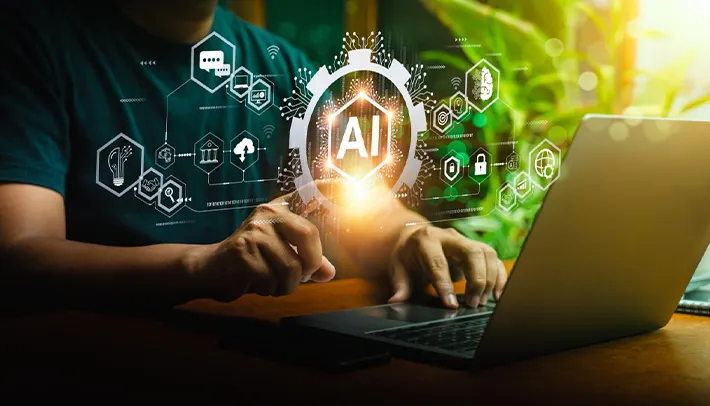
Engineering education in India has always had a problem catching up. The curriculum gets approved before the student joins the college and the industry moves ahead before they graduate. That gap was manageable once. But AI is accelerating the pace of change now, with tools going from research-stage to production-stage in under three years, job roles appearing in placement listings that didn't exist at enrolment. This isn't manageable anymore. India's engineering colleges are responding, some substantially, some slowly. Engineering education for an AI-driven world is changing in specific ways, and these changes are worth understanding for a student.
The Curriculum Is Being Rebuilt Around Outcomes
Many engineering colleges in India are moving toward outcome-based education, designing their curriculum backward from what a graduate should be able to do. AICTE has been pushing this since 2019 and NBA accreditation now signals whether an institution has genuinely restructured or just relabelled the old approach. The practical result: projects and industry assignments are becoming formal degree requirements. A student who graduates with a portfolio alongside a transcript tells a more complete story to a recruiter than marks alone.
AI Is Entering the Curriculum Directly
Five years ago, artificial intelligence and machine learning were elective subjects in most Indian engineering programmes, taken by students with a specific interest in the area. They are becoming core curriculum now, which is the clearest sign of AI-driven engineering education taking hold in India.
AICTE's model curriculum revisions have integrated AI, machine learning, and data science components into Computer Engineering, IT, and related programmes at the foundational level. Several institutions have introduced dedicated B. Tech programmes in Artificial Intelligence and Data Science and in Artificial Intelligence and Machine Learning, with intake numbers growing each year as demand from students and recruiters has made the business case obvious.
The challenge is faculty. Updating a curriculum is an administrative process. Building faculty capacity in AI requires people who understand both the subject and how to teach it, a combination that is genuinely scarce in India. The institutions managing this well are the ones investing in faculty development alongside syllabus revision, and in partnerships with industry that bring practitioners into the classroom rather than relying entirely on academic staff to cover ground that changes quarterly.
NEP 2020 and What It Changes for Engineering
The National Education Policy 2020 introduced a flexibility into Indian higher education that engineering was slow to absorb. The multiple entry and exit options, the ability to combine disciplines, the credit framework that allows students to take courses across departments: these are genuinely significant changes to how a degree can be structured.
For engineering students, the most consequential aspect of NEP 2020 is the legitimisation of interdisciplinary study. A Computer Engineering student who wants to take formal coursework in economics, design, or cognitive science can now do so within the degree framework rather than in spite of it. The student who combines a technical engineering foundation with substantive knowledge in another domain, finance, healthcare, public policy, urban systems, has the profile that distinguishes itself in a job market full of students with similar technical training.
Thakur College of Engineering and Technology in Kandivali has been integrating this transition into the curriculum. The college runs dedicated B. Tech programmes in Artificial Intelligence and Data Science and in Artificial Intelligence and Machine Learning alongside its established streams in Computer Engineering, Mechanical, Civil, and Electronics and the approach to faculty development has kept pace with the syllabus changes rather than trailing behind them. For students searching for the best engineering colleges in Mumbai across any branch, comparing the best engineering colleges near me in the western suburbs, or looking up computer engineering colleges near me, that combination is the part that tends to matter most when the placement season arrives.
Industry-Academia Partnerships are Becoming Common
The guest lecture model of industry exposure, where a professional visits a campus once a semester and speaks to a large audience, is being replaced in serious institutions by something more integrated.
Curriculum co-design is one version of this. Companies working with engineering colleges to build modules that reflect current tools, current problems, and current hiring needs rather than relying on faculty to infer what the industry wants from job listings. Tata Consultancy Services, Infosys, IBM, and a growing number of technology companies have formal academic partnership programmes in India that go beyond recruitment tie-ups.
Live project models are another. A student team working on a problem that a company actually has, under the guidance of both faculty and an industry mentor, produces something closer to professional experience than a classroom simulation. The output is evaluated against real-world standards. The student learns what it means to have a stakeholder who cares about the result.
Internship structures are being formalised as well. AICTE has mandated internship components across engineering programmes, and institutions that had already built these into their curriculum are now ahead of those scrambling to comply. The quality of the internship, whether the student does substantive work or peripheral admin, still varies enormously. The mandate at least creates accountability for whether the experience happened at all.
The Skills the Industry Is Actually Asking For
A consistent finding across engineering placement data in India is that technical knowledge alone does not predict employability. The companies doing volume hiring of engineering graduates test for technical skills in written rounds and then evaluate for something else entirely in the interview: the ability to communicate clearly, to work through an ambiguous problem in real time, to disagree constructively and build on someone else's thinking.
These are not soft skills in the dismissive sense that phrase sometimes carries. They are specific, learnable capabilities that engineering education has historically underweighted because they don't map neatly to a subject or an exam. Institutions that are building communication, analytical reasoning, and collaborative problem-solving into their formal curriculum, rather than hoping these develop through osmosis, are producing graduates who move through the early stages of a career faster.
The AI dimension adds a layer to this. A graduate who understands how to work alongside AI tools, who knows what to delegate to a model and what requires human judgment, who can evaluate AI output critically rather than accepting it, is more useful to an employer than one with identical technical training who treats AI as either a magic solution or an irrelevance.
What Engineering Education for an AI-Driven World Means for Students Choosing Now
The engineering institutions worth choosing in 2026 are the ones that have genuinely restructured around these changes rather than described them in marketing language. NBA accreditation is one indicator. The presence of outcome-based assessment is another. The quality and specificity of industry partnerships, whether the college can name the companies it works with and what that relationship actually produces, matters more than the length of the recruiter list on the placement page.
The branch still matters. But the institution's approach to preparing students for a world that will keep changing after graduation matters just as much. That approach will shape the future of engineering education in India as much as any single syllabus revision does.