5G and Beyond: The Next Frontier in Wireless Communication
 18th, December, 2025
In the cities, towns, and furthermost corners of the globe, countless signals crisscross the air every second. Invisible messages, images, and information cascade between devices, performing feats that were once purely the realm of science fiction. The tale of wireless communication is one of unceasing change, and at its centre, a new revolution: 5G. This is so much more than faster Internet or clearer calls. It's the foundation for a smarter, better-connected world. But even as 5G becomes part of daily life, engineers are already looking ahead to what comes next.
To understand the future, it helps to know what 5G truly represents. The "G" stands for generation, marking the fifth major step in mobile network technology. Each generation brought a leap forward. The first gave us voice calls, the second introduced text messaging, the third enabled internet browsing, and the fourth made streaming and mobile apps possible. 5G takes that progress to another level by delivering speeds that rival wired connections and reducing the time it takes for devices to respond to signals.
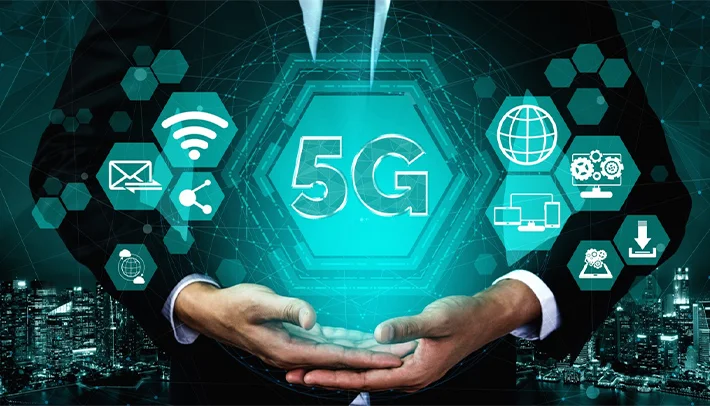
The strength of 5G lies not only in speed but in its ability to connect more devices simultaneously with minimal delay. It enables communication in real time, allowing technologies like autonomous systems, remote surgery, and smart infrastructure to function with precision. This is achieved through advanced antenna systems, efficient use of radio frequencies, and networks that can adapt intelligently to demand.
But 5G is not the end of the journey; the pace of innovation never slows, and engineers are already looking to what's well beyond the horizon. Concepts such as 6G are taking shape in research labs around the world, promising connections that are faster but much more intelligent and responsive. The next wave in wireless communication will mix artificial intelligence with network design, enabling systems to make decisions and allocate resources on the fly.
Let us look at some key areas that shape 5G and beyond technologies:
Ultra-Low Latency
This refers to the time it takes from one device to another. Already, 5G reduces this by a fraction compared to what older networks could manage. The next generation aims to make communication almost instantaneous, which is critical for fields such as automation and healthcare.
Massive Connectivity
Smart cities and industries would require millions of sensors and devices to connect all at the same time. Future networks will support this immense web of connections without congestion and allow machines to talk to each other seamlessly.
Energy Efficiency
Systems that can operate with higher performance consuming less power are being developed by engineers. Sustainable networks will be required for global connectivity without burdening the environment.
Artificial Intelligence Integration
In the future, networks will not only transport data but also analyse them. Intelligent management systems will forecast demand, proactively avoid faults, and optimize performance in real time.
Expanded Spectrum Use
The spectrum, or range of frequencies, used for communication is limited. Advanced technologies find ways to share and reuse these frequencies in ways that minimize interference and improve performance.
Global Reach
The development in the forthcoming stage will focus on reaching remote and less privileged areas. A satellite link combined with improved terrestrial systems will bridge the gap from the urban centres to more rural areas.
The promise of 5G and its successors is more than convenience; it is about building infrastructure to serve progress in transport, healthcare, manufacturing, and education. It will enable machines to coordinate complex tasks, communities to instantly access resources, and innovators to design solutions we have not yet envisioned.
But this transition also presents many challenges: increasing network capacity involves huge investment, meticulous planning, and enhanced cybersecurity; engineers need to balance speed and innovation against reliability and privacy. The story of wireless communication has always been one of discovery-from the very first, static-filled transmissions to the high-speed networks of today, each generation bringing people closer.
As 5G continues to take shape and the horizon of 6G starts to appear, one thing is clear: the air around us will carry more than just signals. It will carry the future itself-connecting ideas, communities, and possibilities in ways the world has only begun to explore.