How Cloud Computing Is Reshaping IT Infrastructure
 28th, September, 2026
For years, IT infrastructure was built around ownership. Organizations purchased servers, networking hardware, storage systems, backup equipment, and physical data centre space because everything had to run internally. Even when demand fluctuated, companies still paid continuously for machines that often remained underutilised for large parts of the year.
How Cloud Computing Changed the Way Companies Build Technology
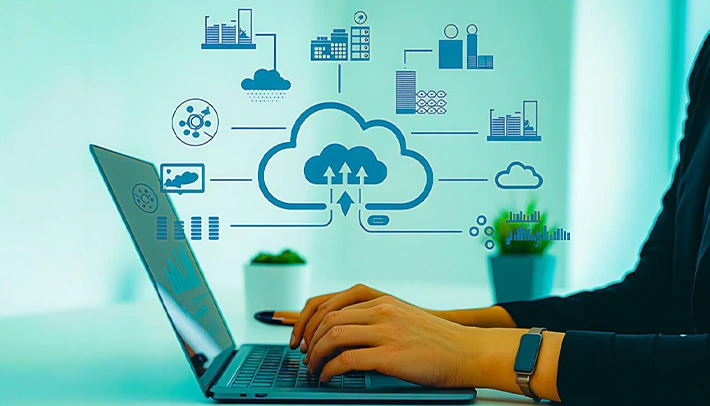
Cloud computing revolutionized the way companies think about IT infrastructure. Instead of building and maintaining massive physical systems internally, organizations can now access computing power, storage, databases, and networking services whenever they need them through platforms like Amazon Web Services, Microsoft Azure, and Google Cloud. The infrastructure still exists physically somewhere, but businesses no longer need to handle most of that complexity themselves.
What made this shift so significant was not just the technology itself, but the way it changed decision-making inside organizations. Launching products became faster because teams no longer had to wait months for infrastructure setup. Startups suddenly gained access to computing resources that previously only large companies could afford comfortably. At the same time, the risks changed shape as well. A single outage, misconfiguration, or security mistake could now affect millions of users almost instantly because systems operate at a much larger scale than before.
The Three Cloud Service Models
Cloud computing discussions are filled with terms like IaaS, PaaS, and SaaS, but the important part is not memorising their definitions. What matters is understanding how each model changes the balance between convenience, control, and responsibility inside an organization’s infrastructure.
Infrastructure as a Service (IaaS) gives companies access to virtual infrastructure such as servers, storage, and networking while still leaving much of the operational responsibility in their hands. The organization continues managing operating systems, deployments, applications, configurations, updates, and large parts of security itself. The cloud provider supplies the infrastructure, but the company still carries significant responsibility for everything running on top of it.
Platform as a Service (PaaS) reduces more of that workload. Developers can focus primarily on building and running applications without spending as much time managing the lower-level infrastructure underneath. The provider handles more of the environment automatically, which speeds up development and reduces operational complexity for teams.
Software as a Service (SaaS) moves even further in that direction. Users simply access software through the internet while the provider manages almost everything behind the scenes, from infrastructure and maintenance to updates and availability.
Engineers working with cloud infrastructure need to understand these boundaries clearly because when applications slow down, security issues appear, or systems fail unexpectedly, knowing who is responsible for what becomes critically important.
Scalability Changed the Economics of Infrastructure
One of the biggest limitations of traditional IT infrastructure was that companies had to guess future demand in advance. If they underestimated traffic, systems slowed down or crashed when too many users arrived at once. If they overestimated it, expensive servers sat idle for months while companies continued paying for capacity they barely used.
Cloud computing changed that model by making infrastructure flexible in real time. Applications can now increase computing power automatically during periods of heavy traffic and reduce it again once demand settles down. For businesses running e-commerce platforms, streaming services, payment systems, or large consumer apps, this completely changed the way products are designed and deployed.
You can see how important this becomes in India during moments when online traffic explodes almost instantly. Festival sales, cricket matches, concert ticket bookings, government portal registrations, or viral social media moments can bring millions of users onto a platform within minutes. If systems cannot handle that surge properly, users rarely wait patiently for things to recover. They leave, complain publicly, or move to competing platforms immediately.
That is why scalability is no longer treated as a specialised infrastructure concern sitting somewhere in the background. Engineers now need to understand how systems behave under pressure, how traffic gets distributed across servers, and how scaling decisions affect both performance and cost. A poorly configured scaling setup can become expensive very quickly, while a badly prepared system can fail at the exact moment a company needs it most.
Security in the Cloud
One of the biggest misconceptions around cloud computing is the idea that moving to the cloud automatically transfers security responsibility to the provider. In reality, cloud security operates through what is called a shared responsibility model.
Cloud providers secure the physical infrastructure, networking backbone, and core platform services. The organization using those services still remains responsible for application security, access permissions, authentication systems, data protection, and configuration management.
Many major cloud-related breaches over the past decade happened not because platforms like AWS or Azure failed technically, but because organizations misconfigured storage systems, exposed databases publicly, or handled permissions poorly. In other words, the infrastructure remained secure while the implementation around it did not.
Cloud Cost Management Has Become an Engineering Discipline
Cloud computing is often promoted as a cheaper alternative to traditional infrastructure, and in many situations it genuinely is. The problem is that cloud spending becomes difficult to track once systems start growing quickly and multiple teams begin deploying resources continuously across projects.
This is part of the reason FinOps has become such an important area inside modern engineering teams. The idea behind FinOps is simple: infrastructure decisions are also financial decisions. Engineers are no longer expected to think only about whether systems function correctly. They also need to think about whether those systems are being used efficiently and whether the company is paying for resources it does not actually need.
At larger scales, even small inefficiencies become expensive surprisingly fast. A poorly optimized cloud setup running across multiple applications and environments can waste enormous amounts of money without causing any obvious technical failure. That is why engineers who understand both infrastructure performance and cost management are increasingly valuable. They are solving operational problems companies deal with constantly, even when users never see those problems directly.
What This Means for the Next Generation of Engineers
Cloud computing is no longer treated as a specialised skill reserved for infrastructure teams. Across the industry, it has become part of the baseline knowledge expected from engineers entering software, cybersecurity, data, networking, and IT roles. Knowing the terminology alone is not enough anymore. What matters is understanding how these systems actually behave once they are operating at scale and handling real users, real traffic, and real operational pressure.
That is why learning cloud computing today has less to do with memorising architecture diagrams and more to do with understanding decision-making. Questions around scalability, deployment, security, system reliability, and resource management now shape how modern technology products are built from the beginning. At TCET, the focus is on helping students connect these concepts to practical environments rather than treating cloud computing as a purely theoretical subject. The shift matters because cloud infrastructure starts feeling real very quickly once students begin working on larger systems where performance issues, downtime, security gaps, and cost inefficiencies have direct consequences.
The engineers who stand out over the next decade will be the ones who understand how these systems behave under pressure, where their limitations appear, and how infrastructure decisions affect everything built on top of them.